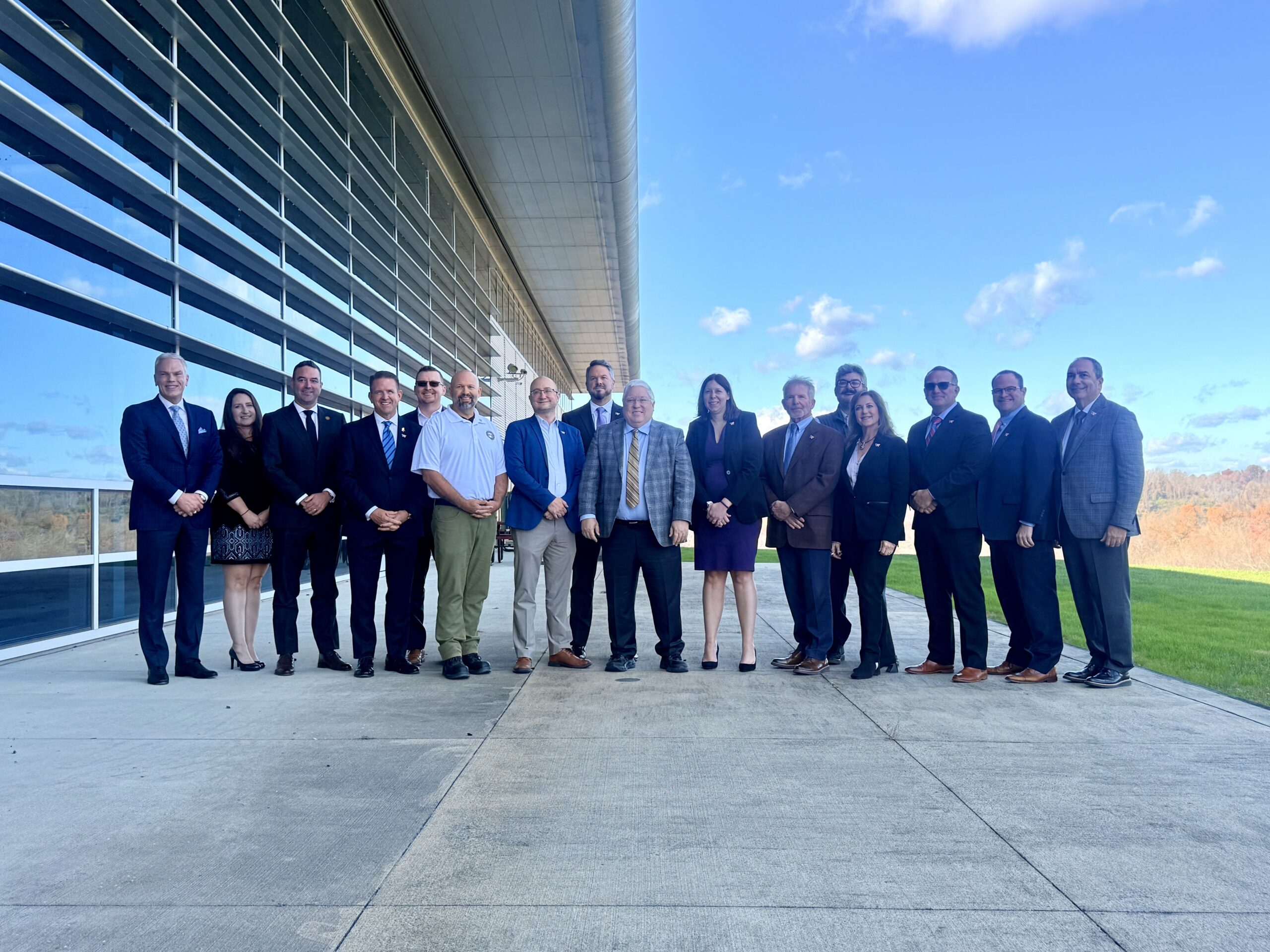
WEST VIRGINIA (November 9, 2026) – The West Virginia First Foundation (WVFF) brought together state leaders and representatives from leading academic and research institutions today for Evidence to Impact: Strategic Partnerships in Higher Education and Research, highlighting a coordinated effort to strengthen West Virginia’s response to the opioid crisis through research, innovation, and collaboration.
Held at the Robert H. Mollohan Research Center in Fairmont, the press conference featured remarks from Governor Patrick Morrisey, WVFF Board Chairman Greg Duckworth and Executive Director Jonathan Board, Marshall University President Brad Smith, West Virginia University President Michael T. Benson, West Virginia Wesleyan President James Moore, and University of Charleston Grants Administrator and Associate Professor Lindsay Acree.
The event showcased how WVFF is leveraging academic and scientific expertise to better understand statewide needs, strengthen prevention, treatment, and recovery efforts, guide funding decisions, and measure the outcomes of opioid settlement investments.
“On behalf of the Board of Directors, I am incredibly proud of what the Foundation has accomplished in such a short amount of time,” said Greg Duckworth, WVFF Board Chairman. “We have been one of the fastest opioid settlement foundations in the nation to get funding into the hands of those making a difference in communities across our state. But we could not have done this alone. We are grateful for the partners joining us today, whose expertise and commitment will help us build on this momentum and continue making an impact for West Virginians.”
The academic and research partnerships highlighted during the event include:
Marshall University: Drawing on the expertise of its Center of Excellence for Recovery to support WVFF’s Community Catalyst Grant review process and helping shape future approaches to tracking outcomes across funded initiatives.
West Virginia University: Leading the West Virginia Wayfinder statewide needs assessment through its Health Affairs Institute, using data to identify gaps in prevention, treatment, and recovery services and inform WVFF’s funding priorities.
West Virginia Wesleyan College: Through its Center for Addiction & Trauma, providing academic reviewers for WVFF’s Community Catalyst Grant, bringing expertise in addiction, trauma, and behavioral health to strengthen the rigor of the review process.
University of Charleston: Building on the naloxone distribution program originally established by the School of Pharmacy, this initiative leverages resources from the Teva opioid settlement to advance overdose prevention efforts and track naloxone utilization and associated outcomes.
Johns Hopkins University: Providing foundational guidance that has helped shape WVFF’s evidence-based approach to grantmaking, from application intake through outcomes measurement.
University of Notre Dame: Through its Wilson Sheehan Lab for Economic Opportunities, providing independent, research-informed evaluation of grant applications to support objective funding decisions and strengthen accountability.
“Behind every dollar we invest is a West Virginian fighting for recovery, a family hoping for a second chance, or a community working to heal,” said Jonathan Board, WVFF Executive Director. “We have a responsibility to make every dollar count. That means going beyond simply funding programs to understanding what works, measuring results, and making decisions that will change the course of this crisis for generations to come. These partnerships are about turning research into action, investments into outcomes, and hope into healing.”
Following the press conference, the University of Charleston hosted a Narcan (naloxone) training for attendees, including the WVFF Board of Directors and staff. The training reinforced the importance of overdose prevention and equipped participants with knowledge and skills to recognize and respond to an opioid overdose.
As WVFF continues its work, these collaborations will play an important role in guiding future investments, evaluating funded programs, and ensuring that opioid settlement resources support measurable progress toward prevention, treatment, recovery, and healing across West Virginia. To learn more, visit wvfirst.org.